

Congratulations, you’re engaged! Before your mind starts racing through guest lists and venue tours, take a second to actually sit with that. You just said yes. The planning will still be there in an hour.
Once you’re ready to dive in, here’s the truth: wedding planning can feel like a lot. Between vendors, budgets, timelines, and approximately one hundred small decisions you didn’t know you’d have to make, it’s easy to feel like you’re behind before you’ve even started. You’re not. Most of that feeling comes from not knowing what to tackle first.
That’s what this checklist is for. 12 to 14 months is generally considered the sweet spot for engagement length, giving you enough time to book vendors, plan details, and enjoy the process instead of racing through it. But if your timeline is shorter, you can still use this guide. Just condense the early months and move through the list a little faster.
Below, you’ll find a month-by-month breakdown of everything from booking your venue to your final dress fitting, so you always know what’s next. Think of it less as a rulebook and more as a roadmap, one you and your partner can adjust to fit your day. Let’s get into it.
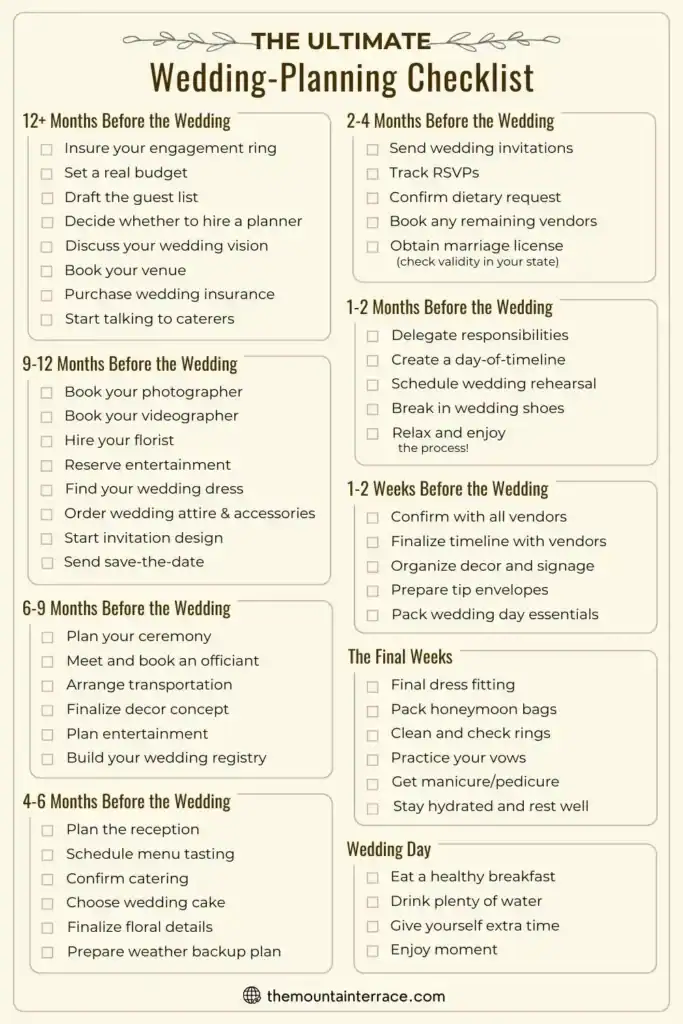
12+ Months Before the Wedding
You’ve got a full year ahead of you, which is exactly the amount of time you want for pulling off the wedding you’re imagining. This is the stage where the big-picture decisions happen, the ones that everything else will build on. Get these right, and the rest of the planning gets a lot easier.
Insure Your Ring
Technically this happens before you’ve even started “wedding planning,” but it’s worth doing anyway. If your partner bought the ring and skipped insurance, fix that now. It takes maybe twenty minutes and saves you a genuinely terrible conversation down the road.
Set a Real Budget
Not a guess. An actual number.
Sit down with your partner, and with anyone else who’s putting money in, and figure out what you’re working with. This is the conversation that decides everything else: your venue, your guest count, how many vendors you can afford, whether the open bar happens. Skip it or rush it, and you’ll spend the next several months making decisions you have to undo later.
Open a spreadsheet the same week. Costs move constantly once vendors start quoting you, and it’s a lot less painful to update a number you’re already tracking than to go digging through texts and emails trying to remember what you agreed to pay for centerpieces.
Draft the Guest List
You will not be able to invite everyone. Nobody does. Start with your budget and a rough idea of venue size, then build the list from there.
If you and your partner are paying for the wedding yourselves, a lot of couples end up keeping around 70 percent of the invites for their own list and letting both families split the rest. If parents are helping fund things, a three-way even split is more common. Neither is a rule you have to follow. Plenty of couples land somewhere in between or ignore the formula entirely and just build a list that reflects who actually matters to them.
Decide on a Planner
This mostly comes down to money, like everything else on this list eventually will. If it fits your budget, a planner is worth it, particularly if you’re working full time and don’t have the bandwidth to chase down eight vendors on your lunch break. A good one will save you time, money, and at least one argument.
If a full planner isn’t realistic, a day-of coordinator is a smaller cost that still buys you a lot of peace of mind. And if neither fits, that’s fine too. You just want to know that going in, so you can build your timeline around doing it yourself.
Talk About What You Actually Want
Before you book anything, talk to your partner about what the day should feel like. Not what looks good on Pinterest, but what you actually want. Formal, or barefoot on a lawn somewhere. Two hundred guests, or thirty people you actually know well. There’s no wrong answer, but you do need to agree on one, because your venue choice depends on it.
Book the Venue
This is the decision that shapes almost everything after it, your guest count, your budget, your date, even the season you get married in. See a few places in person before you commit. Photos flatter everything, and the only way to know how a space actually feels is to stand in it.
Once you find the right venue, don’t wait too long to secure your date. Popular venues, especially for Saturdays during peak wedding season, can book up further in advance than many couples expect. At The Mountain Terrace, we recommend couples begin their venue search early to ensure they have enough time to plan the details that make their celebration unique.
Get Wedding Insurance
You’re spending a serious amount of money on one day, so it’s worth protecting. Event insurance covers things like vendor no-shows, extreme weather, or property damage, the stuff you hope never happens but really don’t want to pay for out of pocket if it does. You can buy it now or wait until the venue’s locked in, either works.
Start Talking to Caterers
Your wedding is, functionally, the biggest dinner party you’ll ever throw, so take the food seriously. Start with people you already trust the venue’s in-house team, someone your planner vouches for, or even a favorite local spot you’ve always wanted to work with. You don’t have to go traditional either. A taco truck at your reception will get talked about for years, in a good way.
9-12 Months Before the Wedding
Book Vendors
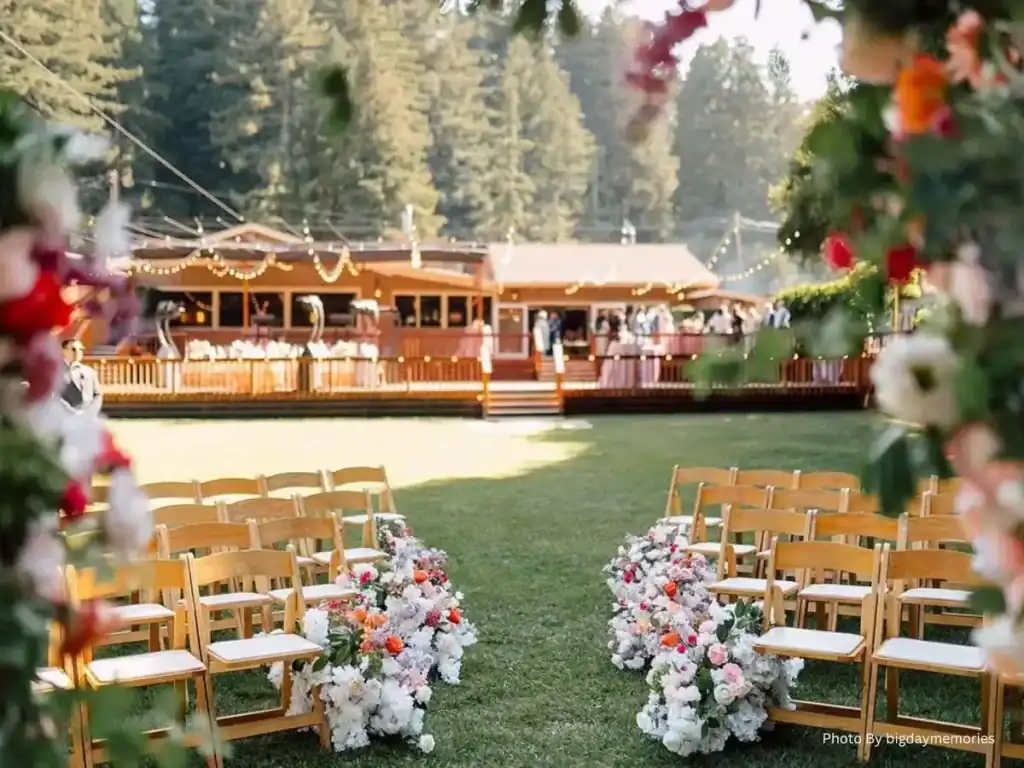
Research and book essential vendors, such as a photographer, videographer, caterer, florist, and entertainment. Check reviews, request quotes, and confirm availability secure contracts to outline expectations and avoid any misunderstandings. The venue you choose should have a list of recommended vendors that they have worked with before and trust. For example, The Mountain Terrace helps couples simplify the planning process by connecting them with reliable wedding professionals who understand the importance of creating a seamless celebration.
Find the Perfect Dress
Give yourself real time for this one. Finding the dress often takes longer than people expect, between trying on styles you didn’t think you’d like and sitting with a big decision. Bring a small group whose opinions you actually trust, not everyone you know. Too many voices in the room tends to make this harder, not easier.
Once you’ve found one, don’t wait to order it. Ordering early gives you a buffer against delays and avoids the rush fees that come with waiting too long.
Wedding Attire and Accessories
Selecting the perfect wedding attire is a significant decision for both the bride and groom. Brides should consider factors such as silhouette, fabric, and neckline that complement their body type. Grooms, on the other hand, should aim for a suit or tuxedo that complements the wedding theme and fits them well.
It is also essential to consider accessories such as shoes, jewelry, and the veil, as these details can enhance your overall look and add a touch of personality to your ensemble. When making these selections, prioritize both comfort and style.
Start Thinking About Invitations
If you’re going custom, this is the time to start, especially if you want something designed from scratch. Custom stationery takes longer than people expect between design rounds, proofing, and printing.
If you’re keeping things simpler, you’ve got more breathing room and can revisit this closer to the six-month mark. Either way, invitations typically go out six to eight weeks before the wedding, so keep that date in mind as you plan backward.
Send Save-the-Dates
Time to make it official. Once someone gets a save-the-date, they’re getting an invitation too, so this is also a good moment to double check your guest list is actually where you want it before these go out.
Wedding Stationery and Paper Goods
Your wedding stationery is an important aspect of your big day. It sets the tone and gives your guests a sneak peek into what they can expect. You can make it more creative by incorporating elements that reflect your wedding theme or personal interests.
It is important to ensure that your chosen theme is carried throughout all stationery items, including RSVP cards, menus, and thank-you notes. When selecting paper and printing options, consider factors such as texture, color, and printing techniques to achieve the desired aesthetic.
6-9 Months Before the Wedding
Plan the Ceremony
Collaborate with your officiant to create a meaningful ceremony. Choose readings, select vows, and decide on any rituals or traditions you want to incorporate.
Arrange Transportation
Arrange transportation for the wedding party and guests, especially if the ceremony and reception are in a remote location. Confirm the logistics and ensure everyone arrives on time.
Finalize Decor and Details
Work on the overall decor and details, such as centerpieces, table settings, and any personalized touches. Ensure that the decor aligns with your chosen theme and colors. Many times, the venue can provide a recommended vendor list to give you options.
Entertainment and Music
Entertainment plays a vital role in any wedding celebration. It sets the mood and keeps guests engaged throughout the event. You should consider various options such as live bands, DJs, or even unique performers like magicians or acrobats to add an element of surprise.
To cater to different parts of the wedding, create playlists that are appropriate for the ceremony, cocktail hour, reception, and dance party. You can further personalize your wedding and leave a lasting impression on your guests by arranging special dances or performances, such as a choreographed first dance or cultural presentations.
As you finalize these key details, remember that organizing your registry is crucial to seamless wedding planning. For a complete guide to help you stay prepared, explore The Ultimate Wedding Registry Checklist.
4-6 Months Before the Wedding
Plan the Reception
Coordinate with your venue and caterer to create a menu that suits your taste and accommodates any dietary restrictions of your guests. Be sure to taste the food with your caterer to get a sense of their cooking style and to help make your menu selections.
Plan the reception timeline, including the entrance, toasts, cake cutting, and the first dance. If your budget permits, a wedding planner and or day-of-event coordinator can help with all of this to make it easier for you and your partner.
Create a Backup Plan
Be prepared for unexpected challenges, especially if your wedding is outdoors. Have a backup plan in case of inclement weather or other unforeseen circumstances. If you choose an outdoor venue, consult with them on suggestions for a “backup plan”.
2-4 Months Before the Wedding
Send Invitations
Sending out wedding invitations is a crucial step in the planning process, marking the official announcement of your special day. Here’s how to ensure your invitations make a lasting impression.
Manage RSVPs
Keep track of RSVPs and dietary preferences. Provide your caterer with the final guest count well in advance to ensure they can accommodate your needs.
Finalize Legalities
Ensure all legal requirements for marriage are met. Obtain the necessary permits, marriage licenses, and any other documents required by your jurisdiction. Don’t forget to bring this paperwork to the wedding for your officiant to sign.
1-2 Months Before the Wedding
Delegate Responsibilities
As the wedding day approaches, delegate tasks to reliable friends or family members or your day of event coordinator. This can include managing the schedule, coordinating with vendors, distributing gratuities, and handling any last-minute details so you can focus on enjoying yourself!
Rehearse and Relax
Rehearse at the venue to familiarize the wedding party with the ceremony and reception plans. Take this time to relax and enjoy the moment before the whirlwind of the wedding day. If you have a day of event coordinator, they will help you orchestrate the rehearsal.
1-2 Weeks Before the Wedding
Confirm All Vendor Arrangements
Reach out to all your vendors to confirm the final details. This includes the photographer, videographer, caterer, florist, entertainment, and any other services you’ve booked. Verify arrival times, services to be provided, and any special instructions. Make sure you have a clear understanding of the timeline and expectations for the day.
Ensure All Decor and Personal Touches Are Ready
Review all your decor elements to ensure everything is ready and aligns with your vision. This includes centerpieces, table settings, signage, and any personalized touches you’ve planned. If you’re handling the decor yourself, organize everything in advance and label each item for easy setup. If a vendor or coordinator is managing this, provide them with detailed instructions and a clear vision of your desired outcome.
Final Week
Congratulations! You’ve made it all the way to the final week of wedding planning. Deep breaths now, most of the hard work is over at this point. Now’s the time to take care of the little things like:
- Manicure/pedicure
- Getting a massage
- Final dress fitting
- Pack your bags for the honeymoon (if you’re leaving after your wedding)
- Clean your ring
- Chase any RSVP stragglers and deliver the final headcount
- Clear your work to-do list so you can only focus on wedding festivities and take it all in
- Practice your vows out loud
- Write your partner a note
Night Before and Morning of the Wedding
The big day is finally here. All that careful preparation and creative planning have come to fruition, and it’s time to enjoy the wedding. Here’s what to do:
The Night Before:
- Eat a healthy meal
- Pack a clutch or small bag of personal items
- Drink water
- Get a good night’s sleep
- Put any boxes, suitcases, bags, and survival kits to bring to the ceremony or reception in the car
The Morning Of:
- Stay off your feet as much as possible
- Eat breakfast
- Drink even more water
- Take your dress and veil out of the bag early on and have someone steam them if needed
- Lay out all the items (rings, invitations, etc.) that you want the photographer to capture
- Exchange notes with your partner
- Say thank you to everyone around you
Wedding Day
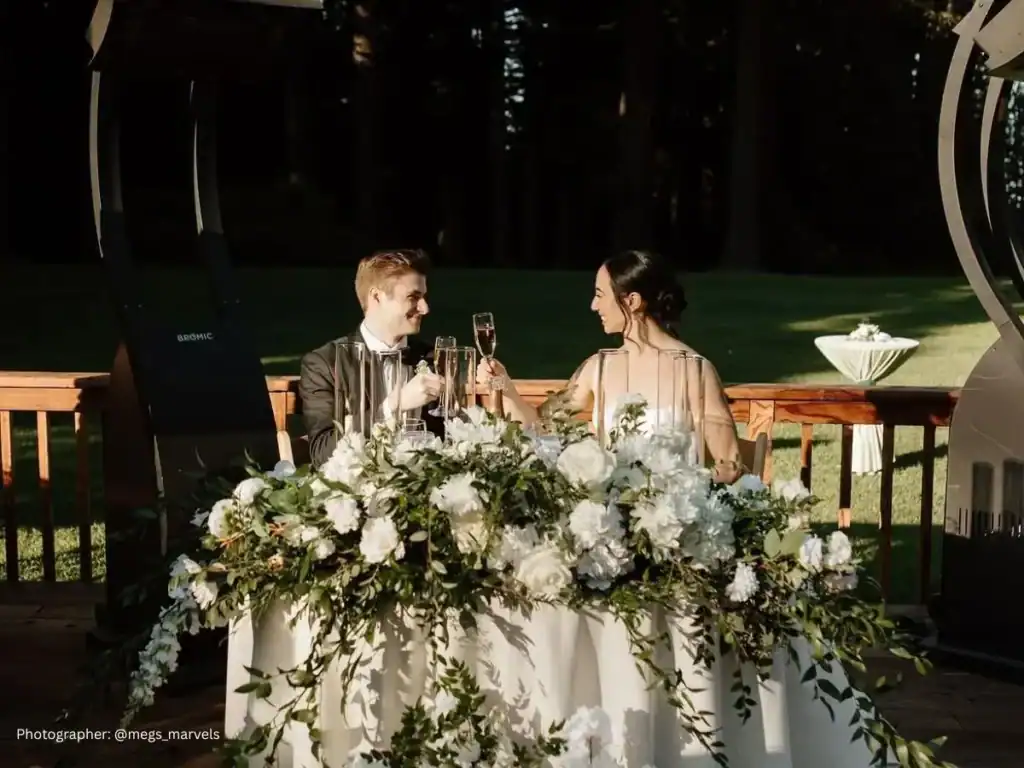
The big day is finally here. Trust the planning you’ve done and focus on enjoying every moment with your partner, family, and friends.
Let your planner, coordinator, or a trusted person handle any last-minute questions so you can stay present and celebrate your special day.
Take time to enjoy the little moments of your vows, first dance, and the memories you are creating together.
Post-Wedding Tasks
After the celebration, send thank-you notes to your guests and vendors, settle any remaining bills, and return rented items. Take time to enjoy your wedding memories and celebrate the start of this new chapter together.
Wrapping Up
Planning a wedding involves a combination of creativity, organization, and thoughtful decision-making. By following these steps and staying organized, couples can navigate the wedding planning process with confidence, ensuring a beautiful and unforgettable celebration of their love.
Keep in mind that flexibility and communication are key, and most importantly, enjoy the journey to the altar at the beginning of a new chapter in your lives together. Choosing a venue that understands your vision can make the entire experience more enjoyable. At The Mountain Terrace, we are committed to helping couples create unforgettable wedding celebrations filled with meaningful moments and lasting memories.